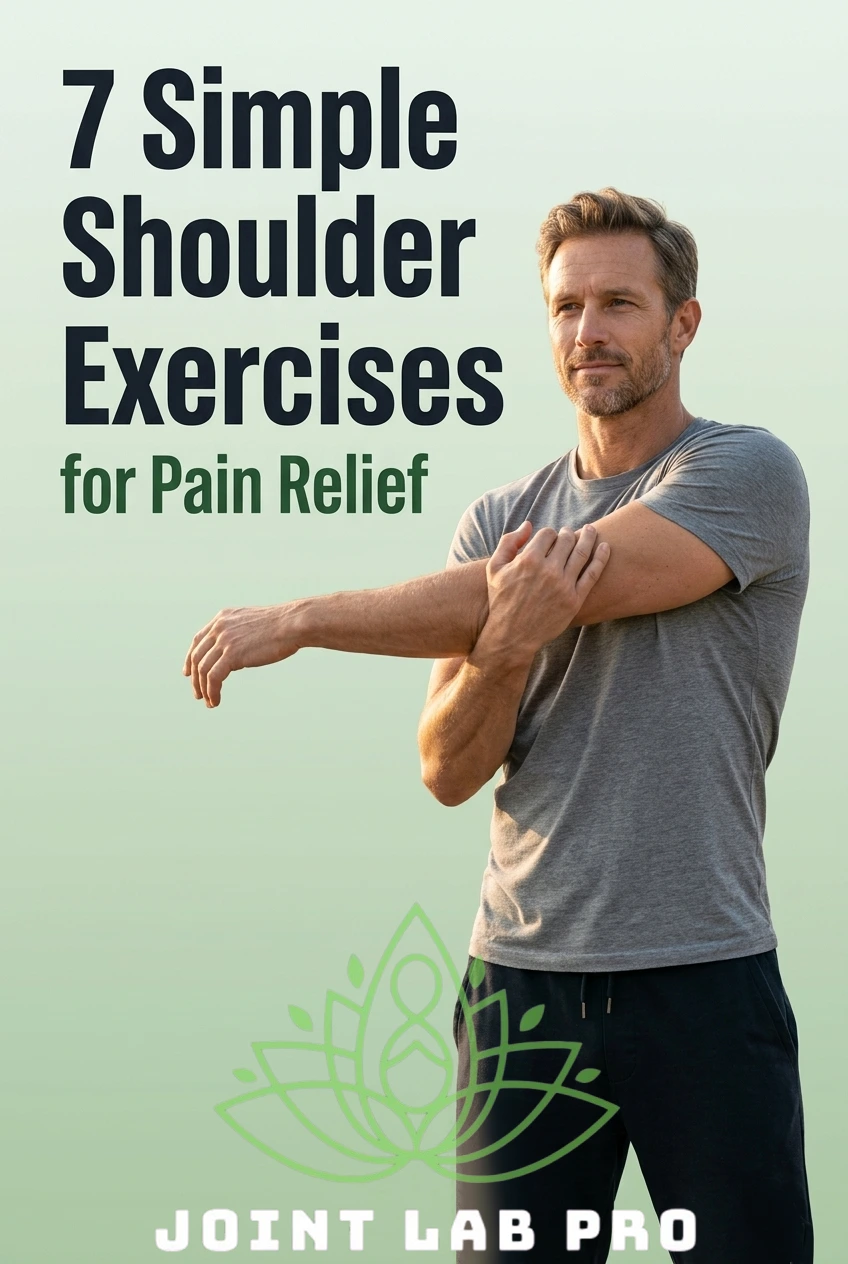
7 Shoulder Exercises for Pain Relief (2026)
Beginner-Friendly · Rehab-Approved · OA & RA Safe
Dealing with rotator cuff strain, frozen shoulder, or general stiffness? These 7 beginner-friendly shoulder exercises are used in rehab programs to improve range of motion and reduce everyday discomfort. No heavy equipment — just 10–20 minutes a day and consistency.
⚠️ Medical disclaimer
This guide is general information only and is not medical advice. Always talk to your doctor or physiotherapist before starting new exercises, especially if you have a diagnosed shoulder condition, recent injury, surgery, or significant pain. Stop immediately if pain spikes or feels sharp rather than stretchy.
Shoulder pain is extremely common in adults — whether from rotator cuff irritation, frozen shoulder, posture issues, or repetitive overhead work. Many orthopaedic and physiotherapy programs use simple home exercises to gradually improve mobility, strength, and control around the shoulder joint. Start with around 10 minutes per day and build up slowly.
The 7 Shoulder Pain Exercises
Pendulum Swing — Gentle Mobility Starter
Beginner No equipment Frozen shoulder safeWhy it helps: The pendulum swing moves the shoulder joint with very little load, promoting gentle motion and blood flow without forcing the arm overhead or into painful positions. It’s often the first exercise prescribed after a flare-up or in frozen shoulder rehab.
How to perform:
- Stand leaning slightly forward, supporting yourself with your good arm on a table or chair.
- Let the affected arm hang loose like a pendulum.
- Gently swing the hanging arm forward and back 10–15 times.
- Then swing side to side 10–15 times, and in small circles 8–10 times each direction.
- Rest and repeat 1–2 sets if comfortable.
💡 Tip
Keep your shoulder relaxed — movement should feel easy and “swingy”, not forced. If very stiff or painful, start with fewer reps and smaller arcs. Movement should be driven by gentle body momentum, not active muscle effort.
Towel Stretch — Behind-the-Back Stretch
Beginner Towel or belt Stay below pain thresholdWhy it helps: Works shoulder rotation behind your back — a motion that often stiffens with rotator cuff or capsule irritation. Gradually restores internal rotation range of motion with zero joint loading.
How to perform:
- Hold a towel or belt behind your back — good arm above your shoulder, affected arm behind your lower back.
- Use the top arm to gently pull the towel upward until you feel a mild to moderate stretch.
- Hold 15–20 seconds, breathing steadily.
- Relax and repeat 3–4 times, then switch positions if comfortable.
💡 Tip
Keep your neck relaxed and avoid jerking motions. If the stretch is too intense, use a longer towel and pull more gently. You should feel a stretch — not a sharp pinch in the front of the shoulder.
Side-Lying External Rotation — Rotator Cuff Strengthener
Light weight optional Beginner–Intermediate Start with no weightWhy it helps: Targets the rotator cuff muscles that rotate the arm outward and stabilise the shoulder joint. One of the most prescribed physiotherapy exercises for rotator cuff strain — but only effective if done slowly and with light resistance.
How to perform:
- Lie on your non-painful side with the affected arm on top, elbow bent 90° and tucked to your side, forearm resting across your torso.
- Hold a very light weight (0.5–1kg dumbbell or water bottle) or start with no weight at all.
- Keeping the elbow glued to your side, slowly rotate your forearm upward toward the ceiling.
- Pause 1–2 seconds at the top, then lower back down with control.
- 8–12 reps, 2–3 sets, as tolerated.
💡 Tip
If you feel pinching at the top of the movement, reduce the range or remove the weight entirely. Form and control matter far more than load here. The lowering phase (eccentric) is where most of the strengthening benefit occurs.
Sleeper Stretch — Internal Rotation Stretch
Beginner No equipment Conservative — don’t pushWhy it helps: Focuses on internal rotation — a motion that commonly stiffens with shoulder issues, particularly in throwing athletes and desk workers. Effective when done gently, but can irritate some shoulders if pushed too hard.
How to perform:
- Lie on your affected side with the shoulder and elbow both at about 90°, arm in front of you.
- Use your other hand to gently press the forearm of the lower arm toward the floor until you feel a comfortable stretch in the back of the shoulder.
- Hold 15–20 seconds, then slowly release.
- Repeat 3–4 times, resting between holds.
💡 Tip
If this position is too intense, place a small pillow under your head and arm to reduce the angle. This should stay firmly in the “good stretch” zone — stop immediately if you feel sharp pain or pinching.
Doorway Stretch — Chest & Front Shoulder Opener
Beginner Doorframe required Posture correctionWhy it helps: Many people with shoulder pain also have rounded shoulders and tight chest muscles from long hours at a desk. This stretch opens the front of the shoulder and chest, improving posture and reducing impingement-related discomfort.
How to perform:
- Stand in a doorway with your forearms on the door frame and elbows at about shoulder height.
- Step one foot forward and lean gently through the doorway until you feel a stretch across your chest and the front of your shoulders.
- Hold 15–30 seconds, keeping your shoulders down and away from your ears.
- Back out of the stretch slowly and repeat 2–3 times.
💡 Tip
If the stretch feels too intense, lower your elbows slightly or step forward less. Keep your breathing slow and relaxed. Your shoulders should feel open — not compressed or pinched at the front.
Band Pull-Aparts — Upper Back & Shoulder Blade Control
Resistance band Beginner–Intermediate Posture & stabilityWhy it helps: Strengthens the muscles between your shoulder blades and the back of your shoulders, improving posture and scapular stability — both essential for healthy shoulder mechanics and reducing impingement risk.
How to perform:
- Hold a light resistance band with both hands at shoulder height, arms straight in front of you.
- With soft elbows, gently pull the band apart, focusing on squeezing your shoulder blades together.
- Pause 1–2 seconds, then return to the start with control.
- 10–15 reps, 2–3 sets.
💡 Tip
Start with a very light band and focus on quality of movement rather than force. Your neck should stay relaxed throughout — if your traps are engaging heavily, reduce the resistance. The movement should feel in the upper back and rear shoulders, not the neck.
Prone “Y” Raise — Scapular Stabiliser
Beginner No equipment Keep range smallWhy it helps: Targets the lower trapezius and other scapular stabilisers — muscles that help your shoulder blade move smoothly when you lift your arm overhead. Weakness here is a common contributor to impingement and rotator cuff irritation.
How to perform:
- Lie face down on a mat or firm bed with your arms extended overhead in a “Y” shape, thumbs pointing up.
- Gently lift your arms a few centimetres off the surface, squeezing your shoulder blades down and together.
- Hold 2–3 seconds, then lower with control.
- Start with 8–10 reps for 1–2 sets, resting as needed.
💡 Tip
Keep the range small and controlled — this is not about height, it’s about activating the right muscles. If your lower back or neck takes over, reduce the range further or try the movement without lifting the arms at all first.
🗓️ Your 2026 Shoulder Pain Action Plan
A simple progressive approach:
- Week 1: 10 minutes per day — pick 2–3 gentle exercises (pendulum, doorway stretch, towel stretch).
- Week 2: Add 1–2 strength moves (side-lying external rotation, band pull-aparts).
- Week 3+: Build toward a 15–20 minute routine most days, as long as pain stays manageable.
Most people notice small improvements in comfort and mobility over 4–8 weeks with consistency. If pain worsens, becomes sharp, or starts to disturb your sleep, pause and speak with a physiotherapist.
Supporting Your Shoulder Recovery
Exercise addresses the muscular and mechanical side of shoulder pain. For people managing underlying joint inflammation from OA or RA, these products address the inflammatory and structural dimensions alongside your exercise routine.
See all joint health reviews: JointLabPro Reviews & Recommendations →
Full supplement guide: Best Joint Supplements 2026 →
Knee exercises guide: 5 Best Knee Pain Exercises 2026 →
* This article is for informational and educational purposes only and does not constitute medical advice. Always consult a qualified healthcare provider or physiotherapist before beginning a new exercise program, especially if you have a diagnosed joint condition, recent surgery, or are on prescription medications. Some links are affiliate links — JointLabPro participates in the Amazon Associates affiliate program and may earn commissions on qualifying purchases at no extra cost to you. Individual results vary.