
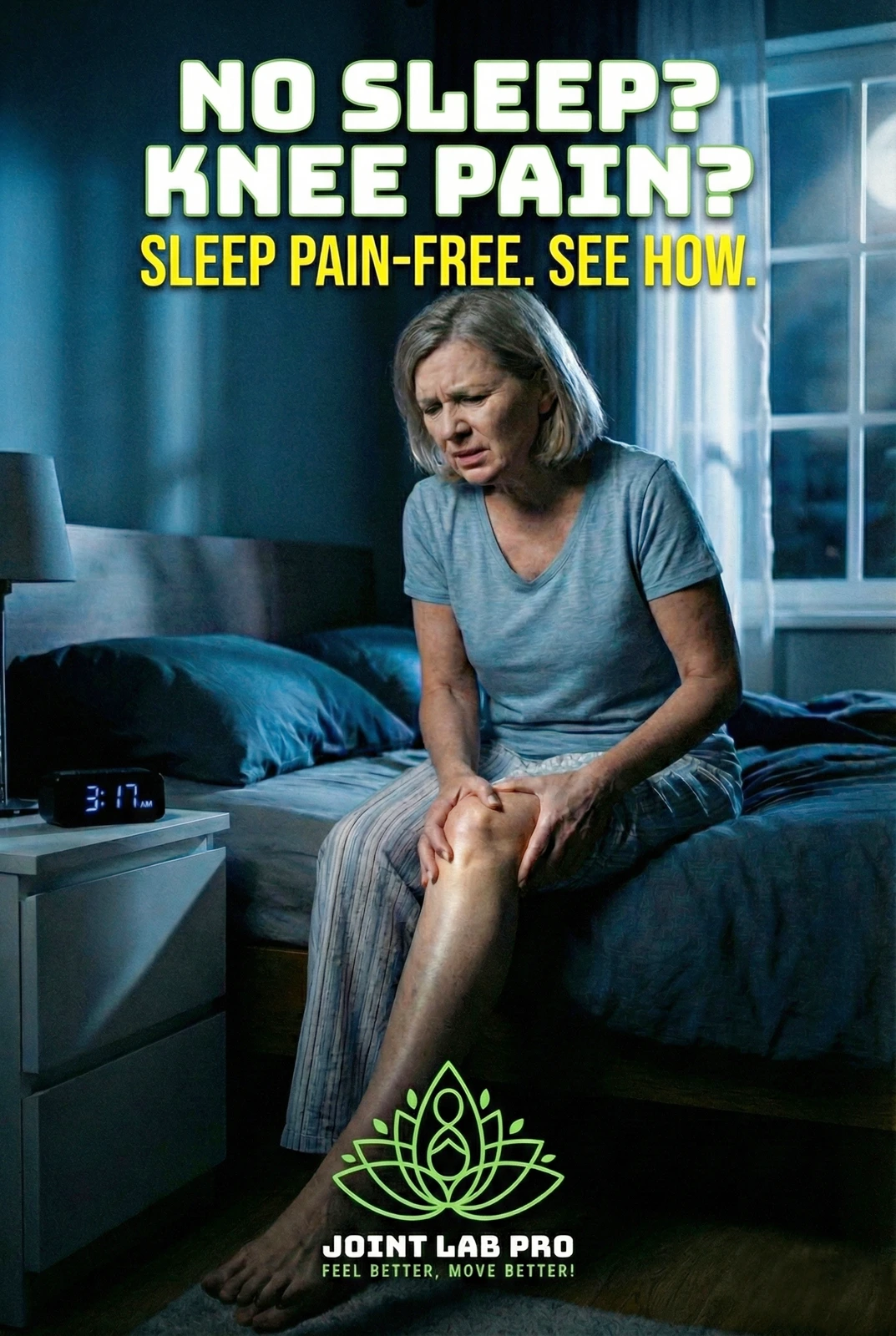
Nighttime Joint Pain: Why It Throbs at Night & 2 Tools That Fix It (2026)
Sleep Position · Topical Relief · Science Explained
Nighttime joint pain is worse when you lie down because cortisol drops, inflammation rises, and poor sleep posture creates pressure points. Two non-pill tools address both the mechanical and sensory causes — so you can actually sleep.
⚠️ Medical disclaimer
This guide is informational only and not medical advice. Persistent or worsening nocturnal joint pain should be evaluated by your doctor — it can sometimes indicate conditions that require specific treatment. Full affiliate disclosure here.
Why Nighttime Joint Pain Gets Worse When You Lie Down
Nighttime joint pain is the cruelest irony of joint conditions — you’re exhausted all day, but the moment you lie down, your knees, hips, or shoulders start throbbing. For millions of people with OA and RA, nocturnal joint pain is the primary cause of non-restorative sleep, which in turn amplifies pain sensitivity the next day through a well-documented inflammatory feedback loop.
The reason pain intensifies at night is multi-factorial:
- Cortisol drops at night — your body’s natural anti-inflammatory hormone falls to its lowest levels between midnight and early morning, allowing inflammatory cytokine activity to peak.
- Inflammatory circadian rhythm — joint inflammation follows a circadian pattern, peaking in the early morning hours. This is why RA morning stiffness is most severe at waking.
- Fluid pooling in joints — lying still allows synovial fluid to pool and thicken rather than circulate, increasing pressure in the joint space.
- Poor sleep posture — side sleeping without support causes the top leg to drop forward, rotating the hip and creating direct pressure between knee condyles.
⚠️ When to see a doctor about nighttime joint pain
Nocturnal joint pain that is worsening progressively, accompanied by fever, redness, or warmth, or occurring in joints you haven’t previously had problems with warrants medical evaluation. Some forms of inflammatory arthritis, infection, and avascular necrosis present primarily as night pain.
🏆 In a hurry?
Jump straight to the two tools: Tool #1 — The Alignment Fix and Tool #2 — The Sensory Relief.
The Alignment Fix: Memory Foam Knee Pillow for Side Sleepers
Over 60% of adults sleep on their side. When you do this without support, your top leg drops forward under gravity, externally rotating your hip and pressing your knees directly against each other. The result: direct bony pressure between your knee condyles all night, and your hip joint held in a rotated position that stresses the capsule and surrounding soft tissue.
The fix is simple and immediate: an ergonomic memory foam knee pillow placed between the knees realigns the hip, pelvis, and spine into a neutral position and creates a soft buffer between the knees. Most side sleepers notice a difference on the first night.
🔬 Why a regular pillow doesn’t work
A standard bed pillow is too large and too soft — it collapses under the leg’s weight within minutes and provides no sustained structural support. The contoured shape of a dedicated knee pillow distributes the leg weight evenly across the inner thigh rather than concentrating it at the knee joint. The memory foam density matters: too soft and it bottoms out, too firm and it creates its own pressure points.
The most practical knee pillow for joint pain — pure memory foam that doesn’t go flat over time, a cooling gel layer that prevents overheating, and critically an adjustable strap that keeps it in place when you shift positions during the night. Without the strap, most knee pillows end up on the floor by 2am.
💡 Also useful for hip and lower back pain
The hip alignment benefit of a knee pillow extends beyond knee pain. Many people with hip OA, SI joint issues, and lower back pain also find significant relief from the neutral pelvis position it creates. If you have both knee and hip pain, this is particularly worthwhile.
Apply this tool consistently for 2–3 nights before evaluating — your body takes a short adjustment period to appreciate the new alignment.
The Sensory Hack: Topical Menthol Gel Before Bed
Even with perfect alignment, the inflammatory ache from OA or RA can still prevent you from falling asleep. You need something that turns down the volume on those pain signals fast, without taking oral medication before bed — NSAIDs and acetaminophen taken nightly are not appropriate for long-term use.
The mechanism: Menthol works via the Gate Control Theory of pain. Menthol activates TRPM8 cold receptors in the skin, generating a powerful cooling sensation that travels to the brain on large, fast A-beta nerve fibres — the same pathway used by touch and pressure. This “closes the gate” to slower C-fibre pain signals from the joint, effectively reducing the pain signal that reaches conscious awareness. The relief is temporary — typically 1–3 hours — but long enough to fall asleep.
🔬 Biofreeze vs Penetrex for nighttime use
Biofreeze provides fast-acting sensory relief via menthol — it works within minutes and lasts 1–3 hours. Penetrex works through Arnica and Boswellia, addressing actual inflammation at the tissue level over hours of contact. For falling asleep, Biofreeze is more effective as an immediate sensory tool. For sustained overnight relief, Penetrex applied 30–60 minutes before bed works on a different timeline. Some people use both — Penetrex first, Biofreeze 30 minutes later just before lights out.
The Professional version has a higher menthol concentration than the standard consumer formula — meaningful for joint pain that doesn’t respond well to regular-strength products. The roll-on applicator is essential for bedtime use as it keeps your hands clean — avoiding accidental eye contact with menthol at 11pm is genuinely important.
💡 Application technique for maximum effect
Apply to the entire joint — not just the most painful spot. For the knee, cover the front, both sides, and the back of the joint. Apply 10–15 minutes before getting into bed, not immediately before — this gives the menthol time to fully penetrate and activate before you’re trying to sleep. Don’t cover with a heating pad immediately after menthol — the combination can cause skin irritation.
If menthol alone isn’t sufficient, see the Penetrex + Biofreeze layering approach in the box above.
The Complete Nighttime Joint Pain Protocol
| Timing | Action | Tool | Mechanism |
|---|---|---|---|
| 30–60 min before bed | Apply Penetrex to joint | Penetrex | Arnica + Boswellia — tissue-level anti-inflammatory |
| 10–15 min before bed | Apply Biofreeze roll-on | Biofreeze Professional | Menthol Gate Control — fast sensory relief |
| Getting into bed | Place knee pillow between knees | Everlasting Comfort Pillow | Hip alignment — eliminates mechanical pressure |
| Mattress consideration | Medium-firm support for joint pressure points | Best Mattress for Joint Pain 2026 | Distributes body weight — reduces point pressure |
✅ The bottom line
You don’t have to accept sleepless, painful nights as normal. The knee pillow eliminates the mechanical cause of nocturnal knee and hip pain for side sleepers — immediately, on the first night. The Biofreeze roll-on closes the sensory gate on pain signals long enough to fall asleep. Together they address both the structural and neurological dimensions of nighttime joint pain without any oral medication.
Better sleep means lower systemic inflammation the next day, less pain sensitivity, and more energy for the movement that keeps joints healthy. Sleep quality and joint health are directly linked — this is not a peripheral concern.
Also relevant for nighttime joint pain:
For the best mattress to reduce pressure points: Best Mattress for Joint Pain 2026 →
For morning stiffness after poor sleep: Morning Knee Stiffness: 3-Step Routine →
For anti-inflammatory topical alternatives: Penetrex vs Biofreeze vs Voltaren →
Full supplement guide: Best Joint Supplements 2026 →
* This article is for informational and educational purposes only and does not constitute medical advice. Always consult a qualified healthcare provider for persistent or worsening joint pain, especially if accompanied by swelling, fever, or night pain in previously unaffected joints. Some links are affiliate links — JointLabPro participates in the Amazon Associates affiliate program and may earn commissions on qualifying purchases at no extra cost to you. Individual results vary.